Sixteen Units a Week and a Blood Panel to Match: A Sober Look at the British Pint
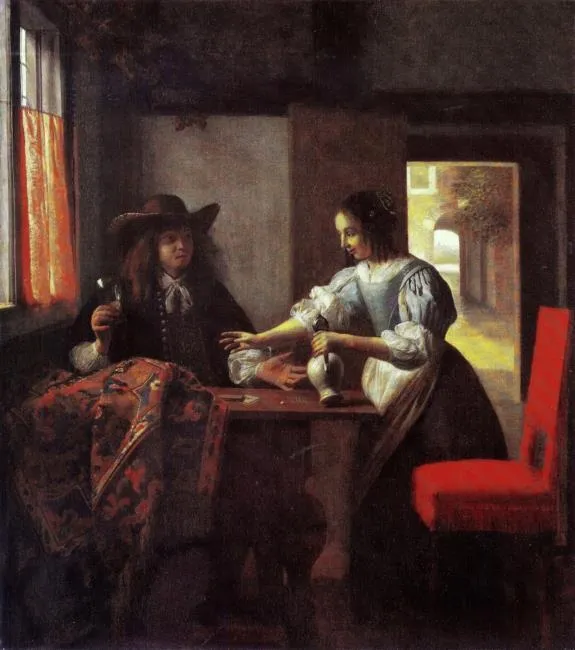
Photo: Pieter de Hooch, Public domain, via Wikimedia Commons
Let us begin with an admission of cultural reality: any men's health publication that tells British men to stop drinking will be read, chuckled at, and closed. The pint is not merely a beverage. It is the punctuation mark of male friendship in this country — the post-five-a-side debrief, the Friday wind-down, the pint that 'doesn't count' because it's a bitter, not a lager.
We are not going to tell you to stop. We are going to tell you what the data says, and then offer something more useful than guilt: a framework.
What Alcohol Actually Does to a Man Over 40
The hormonal mechanics are unglamorous and well-documented. Alcohol suppresses testosterone production at the level of the testes and the hypothalamus. A heavy drinking episode can measurably lower testosterone for up to 48 hours afterwards. Drink most evenings — as a substantial minority of British men over 40 do — and you are never fully outside that window.
Meanwhile, alcohol impairs the liver's ability to metabolise oestrogen, and in men with rising visceral fat, the aromatase enzyme is already busy converting testosterone into oestrogen. The result, seen regularly in clinic bloods: a man with low-normal testosterone, borderline-high oestrogen, and a waist measurement his GP has started mentioning.
Then there is sleep. Alcohol may help you fall asleep faster, but it fragments the second half of the night and suppresses REM and deep sleep — precisely the stages in which the majority of nightly testosterone release occurs. One of the most common patterns we see: a man who drinks three or four nights a week, sleeps 'fine' by his own account, and cannot understand why his morning energy and libido have quietly evaporated.
And the waistline. Alcohol is calorically dense (around 180 calories in a pint of standard bitter), metabolised preferentially over fat, and reliably accompanied by the 11pm kebab or the extra portion of curry. Visceral fat, as we have written before, is not inert — it is hormonally active tissue.
The Framework: Drink Like a Man Who Has Read His Own Bloods
We suggest three principles, in order of impact:
1. Protect the sleep window. No alcohol within three hours of bed, ideally. If you drink, drink earlier — a pint at 7pm does measurably less sleep damage than two at 10:30pm. If your evenings are the problem, your mornings are the evidence.
2. Introduce alcohol-free nights as a default, not a punishment. The UK's alcohol-free beer market has quietly become excellent — there has never been an easier time to order something that looks the part without the hormonal cost. Aim for at least four alcohol-free nights a week. Two consecutive, where possible, so your sleep architecture can actually recover.
3. Keep the social function, change the dose. Nobody remembers whether you had two pints or one. The ritual — the pub, the conversation, the walk home — survives a lower volume intact. Men frequently report the discovery that the third pint was never adding anything to the evening anyway.
The Reckoning Worth Having
If you take one thing from this piece, let it be this: the effects of alcohol on male hormones are not mysterious, and they are not permanent. Testosterone production rebounds within weeks of reduced intake; sleep quality improves within days; visceral fat follows over months.
Book the blood test. Get the testosterone, HbA1c, liver function and lipid panel done. Then make your drinking decisions as a man with data, rather than a man defending a habit. That, ultimately, is what midlife health management is: fewer assumptions, more measurements, and the willingness to adjust the rituals that no longer serve the body carrying them.